Uniforms for emergency services personnel, covers for camp beds, tarpaulins for emergency accommodation. These are some of the potential applications for the high-tech textiles being developed as part of the ‘Secure, Antibacterial, Flame-retardant, Enhanced Guard Apparel for Resilient Defence (SAFEGUARD)’ project led by the Boskovic Institute in Zagreb. Empa, the Swiss research institute for materials science and technology in St. Gallen, is testing their antimicrobial efficacy. The team led by Eva Roblegg at the Institute of Pharmaceutical Sciences at the University of Graz is investigating the skin compatibility of the fabrics.
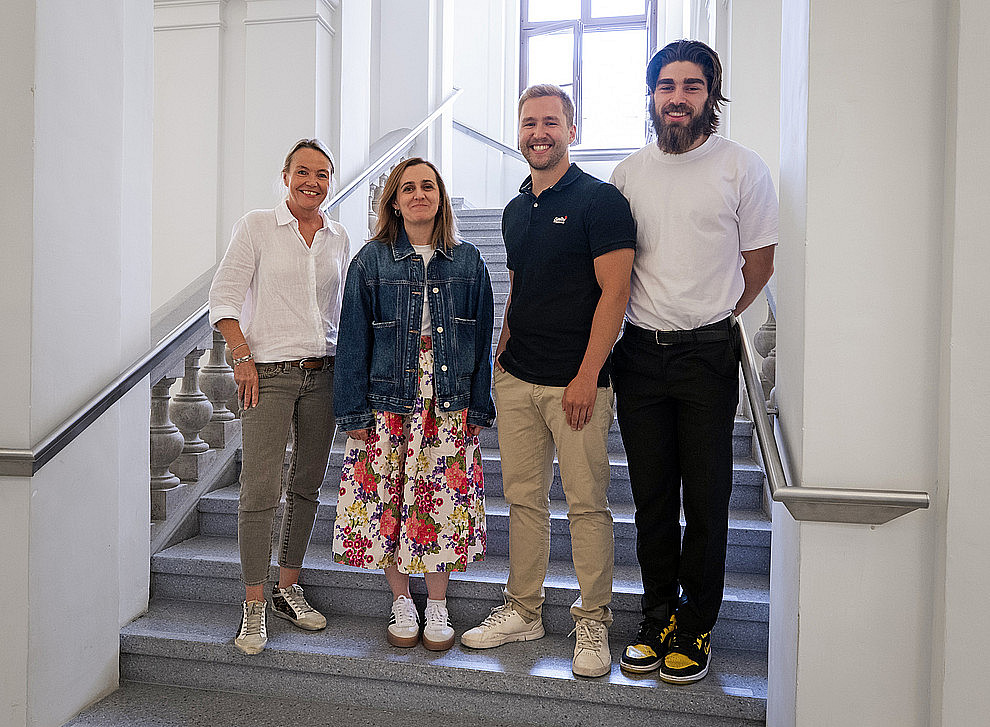
“Our partners in Croatia are working with different types of impregnation. Contact with sweat can cause zinc, copper or iron ions, as well as tannic and phytic acids, to leach out of the coatings and irritate the skin,” explains project team member James McFarlane Hoad. Together with Atida Selmani, he is responsible for culturing skin cells, which are used to investigate potential side effects of the textiles in the laboratory. “The challenge is that the material must be heat-resistant, washable and sweat-resistant, and must not release any harmful substances even over a period of several weeks,” reports Hoad. He adds that the current progress is already looking promising.
In addition to designing drug delivery systems, Eva Roblegg’s research group is working on the development and implementation of various cell culture models, which serve as a platform for investigating novel therapeutic approaches and biomedical materials. This expertise in the field of cell-based test systems is also crucial for the SAFEGUARD project, which is funded by the NATO Science for Peace and Security Programme. (