Begin of page section:
Page sections:

  • Go to contents (Accesskey 1)
  • Go to position marker (Accesskey 2)
  • Go to main navigation (Accesskey 3)
  • Go to sub navigation (Accesskey 4)
  • Go to additional information (Accesskey 5)
  • Go to page settings (user/language) (Accesskey 8)
  • Go to search (Accesskey 9)

End of this page section. Go to overview of page sections

Begin of page section:
Page settings:

English en
Deutsch de
Search
Login

End of this page section. Go to overview of page sections

Begin of page section:
Search:

Search for details about Uni Graz
Close

End of this page section. Go to overview of page sections


Search

Begin of page section:
Main navigation:

Page navigation:

  • University

    University
    • About the University
    • Organisation
    • Faculties
    • Library
    • Working at University of Graz
    • Campus
    Developing solutions for the world of tomorrow - that is our mission. Our students and our researchers take on the great challenges of society and carry the knowledge out.
  • Research Profile

    Research Profile
    • Our Expertise
    • Research Questions
    • Research Portal
    • Promoting Research
    • Research Transfer
    • Ethics in Research
    • Commission for Scientific Integrity
    Scientific excellence and the courage to break new ground. Research at the University of Graz creates the foundations for making the future worth living.
  • Studies

    Studies
    • Prospective Students
    • Students
    • Welcome Weeks for First Year Students
  • Community

    Community
    • International
    • Location
    • Research and Business
    • Alumni
    The University of Graz is a hub for international research and brings together scientists and business experts. Moreover, it fosters the exchange and cooperation in study and teaching.
Topics
  • Sustainable University
  • Researchers answer
  • Work for us
Close menu

End of this page section. Go to overview of page sections

Begin of page section:
You are here:

University of Graz Natural sciences Department of Pharmaceutical Sciences News Heilsames Meer: Forscher entdeckt in Schwämmen neue Ansätze gegen chronische Entzündungen
  • About the Institute
  • Research
  • People
  • Study Services

End of this page section. Go to overview of page sections

Monday, 24 August 2026

The Healing Sea: Researchers discover new approaches to treating chronic inflammation in sponges

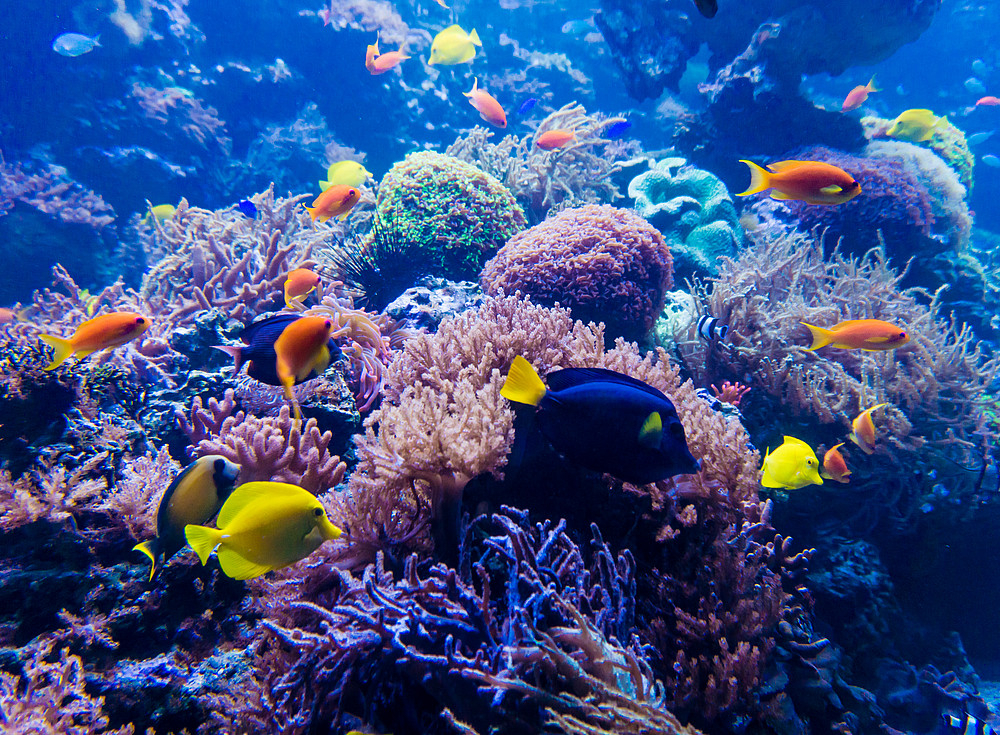
Underwater landscape with corals, sponges and fish

A beautiful underwater world with therapeutic potential: Researchers have discovered that a natural substance derived from a sponge of the genus Spongia can modulate inflammatory processes. Pictured here: An illustrative depiction of a reef featuring corals, sponges and various species of fish. Credit: EwaStudio/AdobeStock.

Chronic inflammation plays a key role in many diseases, ranging from metabolic disorders and cardiovascular diseases to tissue damage following injuries or infections. “Normally, the body is able to resolve inflammation on its own. If this process becomes unbalanced, immune cells remain permanently active and continue to drive negative changes in the tissue,” explains Andreas Koeberle, a pharmacist at the University of Graz.

Together with an international research team, Andreas Koeberle has shown that a natural substance from the sea can modulate inflammatory processes. The scientists synthesised the substance cyclosmenospongin, which had previously been discovered in a sponge of the genus Spongia native to Australia. In the laboratory, they found that the active compound comprehensively alters the lipid profile of human immune cells. “The compounds studied reduced the production of pro-inflammatory leukotrienes whilst simultaneously increasing the levels of several messenger substances associated with the suppression and resolution of inflammation. They therefore significantly alter the metabolic programme of immune cells,” explains Koeberle. 

Reprogramming rather than blocking inflammation

The researchers were particularly surprised to find that this effect is closely linked to the storage of fats in immune cells. Cyclosmenospongin reduces the levels of neutral lipids, triglycerides and cholesterol esters. “As a result, the cells had less material available to produce pro-inflammatory signalling molecules. We achieved similar effects when we specifically inhibited enzymes involved in lipid storage. This demonstrates a close link between fat accumulation in immune cells and inflammation, which was previously unknown in this form,” says Koeberle. 

The research findings provide new avenues for better controlling excessive or chronic inflammation. Colleagues at the University of Innsbruck laid the chemical foundations for the study by synthesising and modifying variants of the natural compounds. The biological investigations were carried out in Graz and Naples, amongst other locations. 

Publication:
Waltl, L., Holubek, D., Speck, K., Wildermuth, R., Haut, F.-L., Permann, S., Plangger, I., Steinborn, C., Rao, Z., D’Avino, D., Cerqua, I., Stadler, J., Roviezzo, F., Schlenke, P., Siller, A., Schennach, H., Koeberle, S.C., Pferschy-Wenzig, E.-M., Rossi, A., Magauer, T., Koeberle, A. Reorganisation of innate immune cell lipid profiles by bioinspired meroterpenoids to limit inflammation. Advanced Science, August 18, 2026, DOI: https://doi.org/10.1002/advs.76861
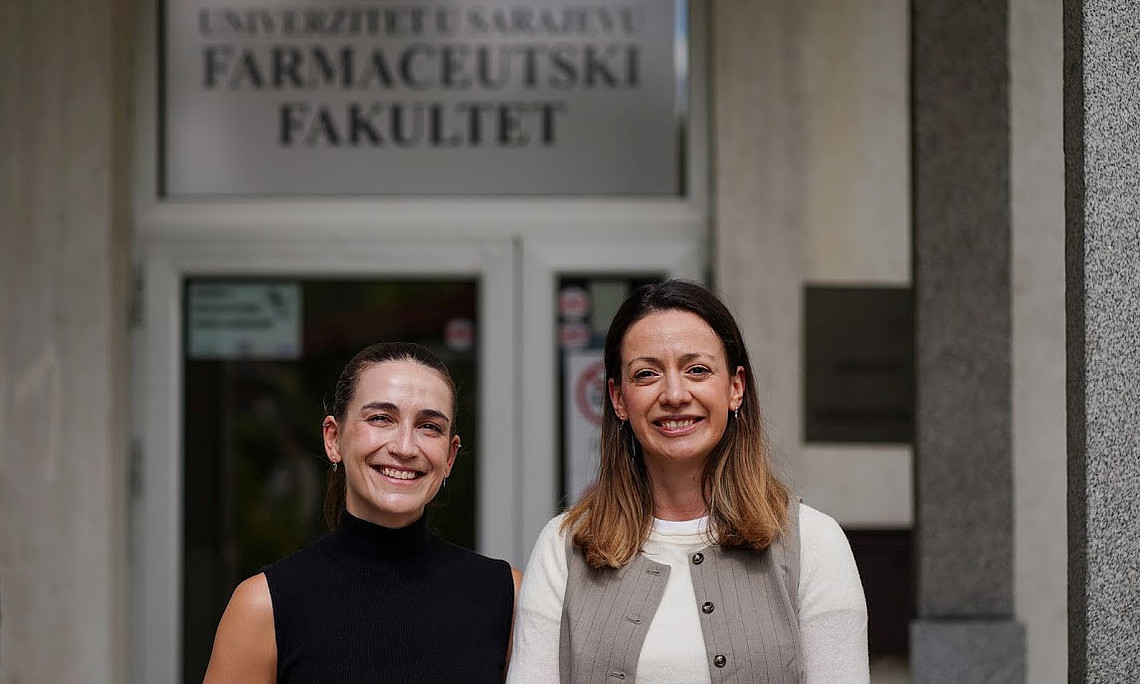
created by Gerhild Leljak

Related news

On behalf of NATO: University of Graz tests high-tech textiles

As part of an international project, antimicrobial and fire-resistant fabrics with UV protection are being developed in Zagreb. Pharmacists from the University of Graz are ensuring that these fabrics are skin-friendly.

BioSPM Summer School in Kanazawa, Japan

Taking part in the BioSPM Summer School 2026 at Kanazawa University in Japan will give Dr Ivana Ruseska from the Department of Pharmaceutical Technology and Biopharmacy an insight into modern scanning probe microscopy, in particular HS-AFM, and its applications in biological research.

Visiting Award for High-Potentials 2026

The University of Graz has awarded Dr Ivana Ruseska from the Department of Pharmaceutical Technology & Biopharmacy the “Visiting Award for High Potentials 2026”. This award enables her to undertake an eight-week research visit at the Helmholtz Zentrum München.

19th Pharma DocDay, 2 July 2026

The Doctoral School of Pharmaceutical Sciences at the University of Graz is pleased to announce the 19th Pharma DocDay, taking place on 2 July 2026 at the Institute of Pharmaceutical Sciences.

Begin of page section:
Additional information:

University of Graz
Universitaetsplatz 3
8010 Graz
Austria
  • Contact
  • Web Editors
  • Moodle
  • UNIGRAZonline
  • Imprint
  • Data Protection Declaration
  • Accessibility Declaration
Weatherstation
Uni Graz

End of this page section. Go to overview of page sections

End of this page section. Go to overview of page sections

Begin of page section:

End of this page section. Go to overview of page sections