


As part of the NATO “SAFEGUARD” project, this scientific question is not only being investigated, but textile coatings are also being developed using combinations of tannic acid, phytic acid, and iron, zinc, or copper ions. The goal is to design and manufacture innovative protective textiles for soldiers, firefighters, and medical personnel in high-risk environments.
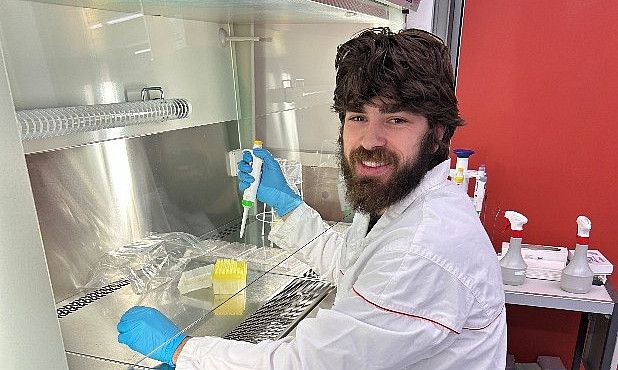
During a two-week stay at the Biointerfaces Laboratory at Empa (Swiss Federal Laboratories for Materials Testing and Research) under the direction of Prof. Dr. Katharina Maniura, James McFarlane Hoad focused intensively on the antimicrobial aspect of the project. Under the guidance of Dr. Mihyun Lee and Marc Puschmann, he worked with Gram-positive and Gram-negative bacterial strains to evaluate potential textile coatings.
Initially, minimum inhibitory concentration (MIC) tests were used to determine the lowest concentration of each coating component at which no visible bacterial growth occurred. Subsequently, bacterial suspensions were applied to the coated fabrics, and colony-forming units (CFU) were determined from both the fabric surfaces and the surrounding liquid. This allowed for an estimation of the number of surviving bacteria and an assessment of whether the antimicrobial effect extended beyond the immediate fabric surface.